Category: Elections
-
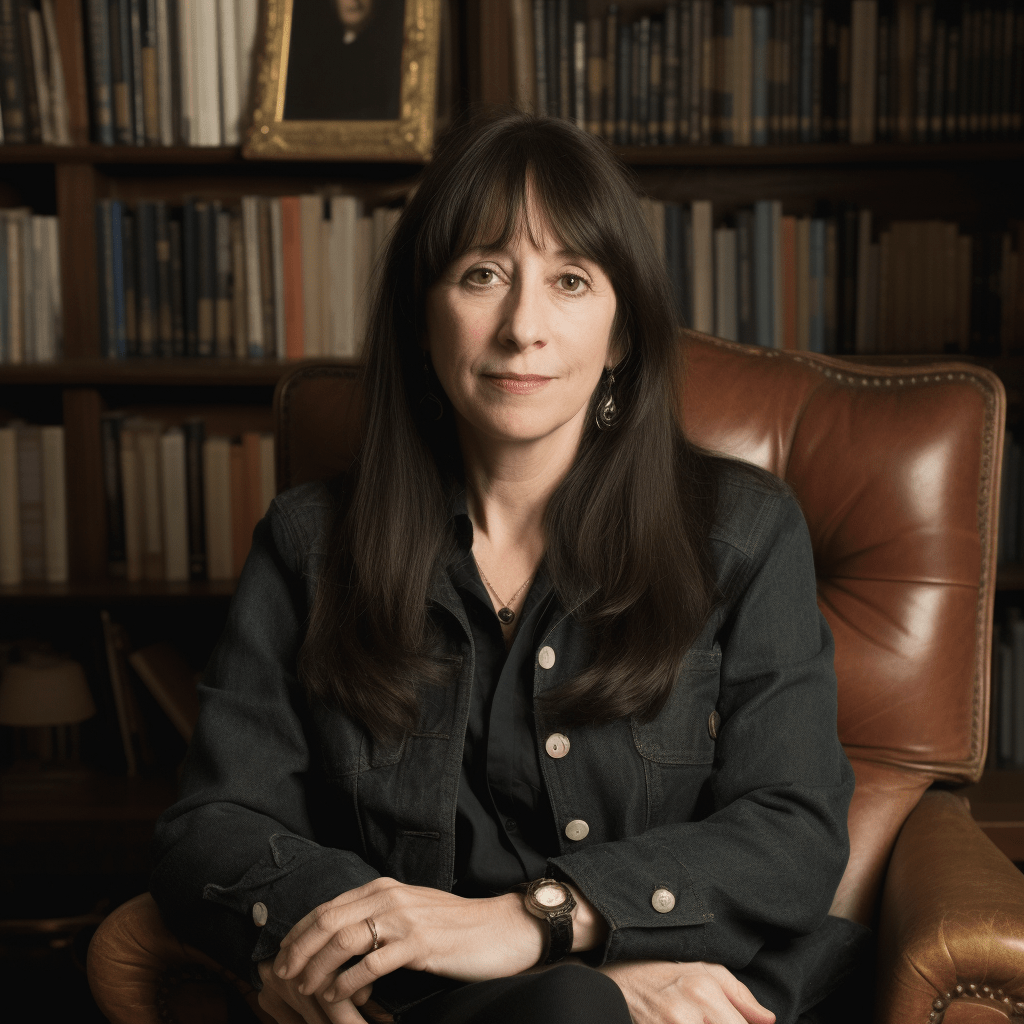
Jane Mayer: Dark Money in Politics
How does “money in politics” work? Is there a plan by some billionaires to seed the political landscape with “dark money”? In this post, we present the research of investigative journalist Jane Mayer who exposed the immense influence of the Koch brothers on American politics. The Koch brothers are wealthy libertarians who have used their…
-

Political Parties: Images and Policy Reputations
What are party images? What is a policy reputation? In the course of their lives, political parties acquire policy reputations. That is, individuals and groups evaluate a party’s position on the issues of the day. The totality of these perceptions is referred to as their “party image”. Distinct issues fragment party images, such that a…
-

Gender Quotas in Politics
Gender quotas in politics are rules that aim at providing opportunities for women to be in parliament or to appear on candidate lists in elections for political office. In this post, we discuss the types of gender quotas in politics, how parliaments in democracy adopt quotas, whether they are effective in placing more women in…
-
Political Voice and Economic Inequality: Institutional Factors
We at the POLINQ project examined 18 quantitative cross-national articles by major scholars in the leading journals to develop a typology of institutional factors that influence the relationship between political voice and economic inequality. We comment on how scholars have measured these factors, or “concepts.” At a glance… Institutional Factors that Link Voice to Inequality…
-
Political Participation and Democracy
What is the relationship between political participation and democracy? Democracy and political participation — such as protest or voting — feed off of each other. Social scientists argue that when democracy is strong, more people participate. Why? Because democracy opens up possibilities for political participation such as voting, protest, and working for political parties and…
-

Democratic Backsliding: Definition and Measurement
What is democratic backsliding? Democratic backsliding is when a democratic country shows signs of becoming autocratic or authoritarian. Backsliding can occur when a democracy has just a foothold (e.g. Poland in the early 1990s) or is firmly established as a democracy (the USA). How do we know when democratic backsliding occurs? Social scientists typically use…
-

Democracy and Economic Inequality
Why does economic inequality rise in democracies? Economic inequality is rising, and the United Nations reports that economic inequality impacts 70 percent of the world, even when we include democracies such as the US, UK, France, and Germany. Why does democracy not reduce economic inequality? According to democratic theories, giving everyone the vote and allowing…
-

The Meaning of Political Voice
What does political voice mean? Political voice is commonly understood as an important part of democracy. Academics and the public use the term political voice. While academics use the term often, it is more important to know how the public uses and understands the term. After all, there is more of the public than there…
-
Party Issue Positions and Legislative Actions on Corruption in Ukraine, 2002 – 2017
by Nika Palaguta, Graduate School for Social Research, Polish Academy of Sciences This research was funded by the Preludium grant of the National Science Centre, Poland [Narodowe Centrum Nauki]. Project number: 2017/25/N/HS6/01174. Project Name: Influence of party ideology and characteristics of parliamentarians on legislative actions on war, corruption and inequality in Ukraine [Wpływ ideologii partii…
-

Interview with Piotr Zagorski on Education and Support for Right-wing Populist Parties in Central and Eastern Europe
Piotr Zagorski and Andrés Santana, of Universidad Autónoma de Madrid, Spain, recently presented their paper, “Voice or Exit: Education, Support for Right-wing Populist Parties, and Abstention in Central and Eastern Europe,” at the Politics and Inequality conference held December 2018 in Warsaw, Poland. Piotr Zagórski is a Ph.D. candidate in Political Science at Faculty of…
-
Elections during War: Political Inequality of Ukraine’s IDPs
by Dorota Woroniecka-Krzyżanowska, University of Lodz, and Nika Palaguta, Polish Academy of Sciences By law, Internally Displaced Persons (IDPs) should enjoy all the relevant rights and freedoms guaranteed by the legal system. In a recent article in the Journal of Refugee Studies, the authors explain how IDPs living under military conflict in Ukraine suffer inequality under discriminatory legislation…
 Political Inequality: A blog since 2010