Category: imagined futures
-
The protest “research panopticon” and the right to be forgotten
As political sociologists endeavor to be a “completist” in the description of protest, there must be a data collection plan that is feasible within the time, personnel, and funding, and, above all, ethical. Consider the situation where you would want to know everything about the protest in order to study it qualitatively. Imagine that you…
-
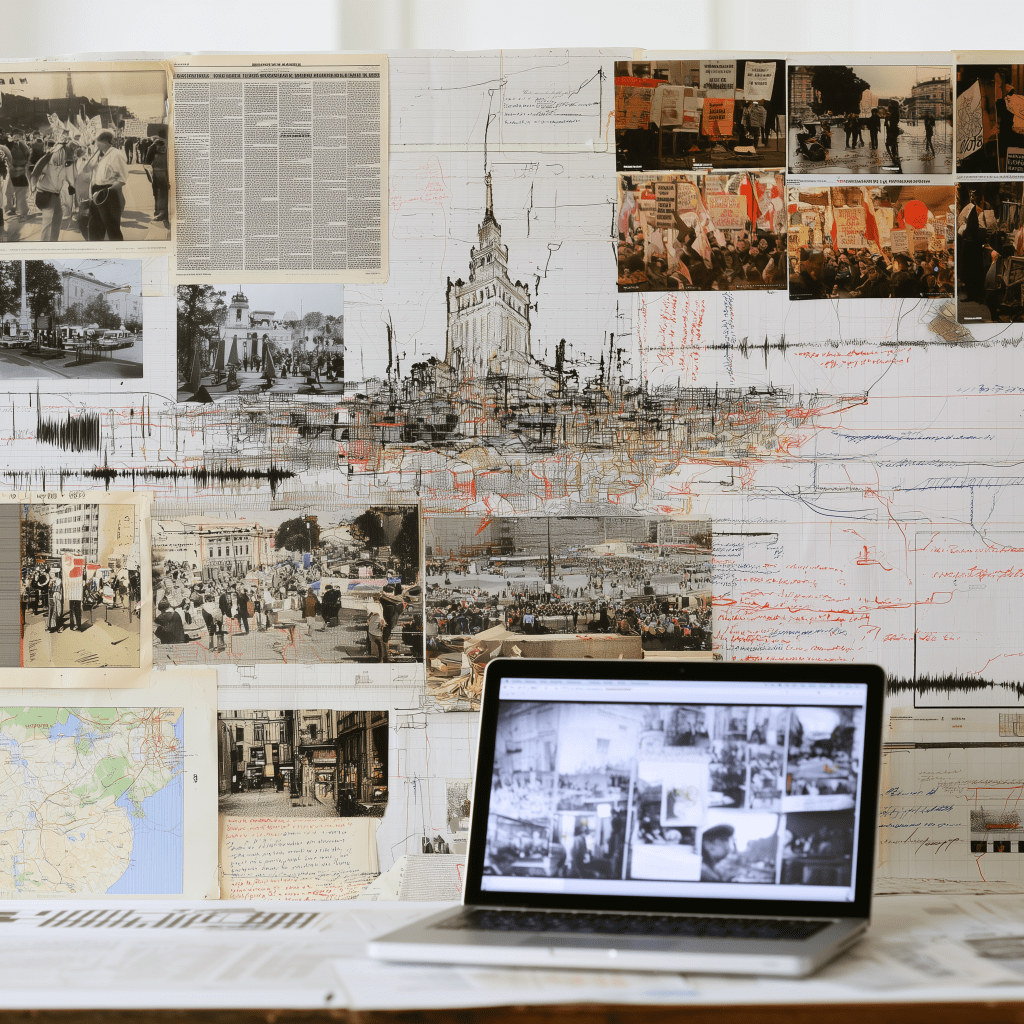
Protest Event Reports (PERs): A Method for Qualitative Analysis
Qualitative research into how street protests are performed and framed, especially across multiple events within a set time and geographic space, requires detailed data on past protests that is tantamount to documentary reconstruction. Whereas there are various ways to qualitatively reconstruct a single or a few protest events, the options are limited for a larger…
-
NCN Grant on Pandemic Protests in Poland: Activities in 2025
We, the research team funded by the National Science Centre (NCN), Poland (2021/43/B/HS6/01155) grant entitled “The Construction of Post-Pandemic Society: Covid-19 Street Protest in Poland,” published articles, organized a conference, and presented research in 2025. Articles Published in 2025 Radiukiewicz, Anna, Joshua Dubrow, and Alan Żukowski. “Multimodal approaches to the reconstruction of street protest events…
-

Empirical Research on Protests and Social Movements in Central and Eastern Europe: Conference 2025
Empirical Research on Protests and Social Movements in Central and Eastern Europe: State of the Art Institute of Philosophy and Sociology, Polish Academy of Sciences (IFiS PAN)72 Nowy Swiat, Warsaw, Poland December 4 – 5, 2025 About Major events in Europe over the last two decades — financial crises, rising populism, EU skepticism, pandemic, and…
-

Every protest is an imagined future
Protests often emerge from a mix of grievance and hope – i.e., dissatisfaction with the present with an aim to change it for the better. Whereas street protests are commonly understood as physical, dynamic, interactive, and collective expressions of objection and dissent, less common is the idea that this form of collective action is future-oriented;…

