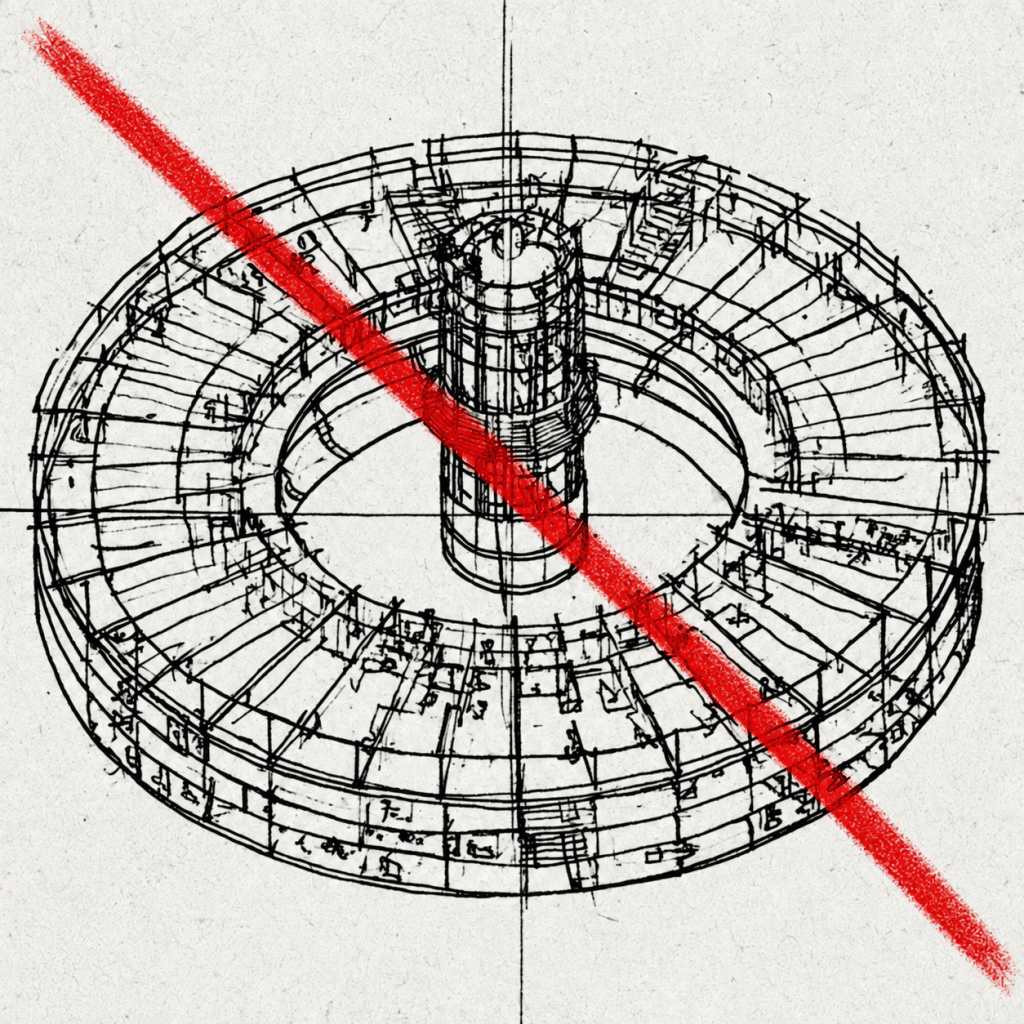
As political sociologists endeavor to be a “completist” in the description of protest, there must be a data collection plan that is feasible within the time, personnel, and funding, and, above all, ethical. Consider the situation where you would want to know everything about the protest in order to study it qualitatively. Imagine that you have all the money and personnel and time that you want. What would be an ideal data situation that would eliminate bias from the description of protests?
For one, you would need data from many sources. Being physically present at the protest would help. Having a full video with audio, from multiple angles, from an entity independent of the protest would also help. To understand their visions we would talk with the people there as they are protesting, and even before and afterwards. We would also know how they comported themselves, the context, where they were, and what their banners read. We would do all of this so we would not rely purely on what they say, but also on what they did.
In essence, a truly holistic process of protest event reconstruction could be tantamount to a “research panopticon” that would challenge ethical norms of anonymity, privacy, and informed consent of protesters. The ethical objections stem from the legal issues raised above and from the moral idea behind the “right to be forgotten:” protest participants did not have the opportunity to consent to the use of their captured materiality, even when it was the media or SMOs that captured it.
The right to be forgotten
Europe’s data protection law, the GDPR, gives people a “right to be forgotten” (Article 17). You can ask an organization to delete your personal data, but only in certain situations. For example, you can ask when the organization no longer needs the data, or when it collected or used the data illegally. Protest data often contain sensitive information. The law gives this kind of information extra protection, but not necessarily towards the deletion of the photo or video (Article 9).
An organization, in certain cases, may be able to keep data even after someone asks for it to be deleted (Article 17(3)), for example in instances of the public’s right to information, scientific research, and legal cases. Here, the burden of such proof is on the organization. These rules try to balance your right to privacy and to control your personal data, and everyone’s right to free expression and information (Articles 8 and 10 of the European Convention on Human Rights; Articles 7, 8, and 11 of the EU Charter of Fundamental Rights). If the person disagrees with the decision, they can complain to a data protection authority, and the case may reach the courts. The law lets research go forward, but it expects researchers to handle people’s information with care.
Collecting protest data for a future authoritarian government
A key issue is the potential harm to researchers, journalists, and other interested actors that make protest data public, especially for those fearing state reprisals. The potential for harm can come from authoritarian or liberal democratic governments. Even when researchers use A/V as secondary data, and combine, catalog, and merge them with other data, and thus make these data publicly available in their new form, there are ethical issues in data preservation and dissemination. Various entities process identical or similar data (about the same protest event) for diverse purposes, which complicates the effective exercise of the “right to be forgotten” by individual protesters.
Preserving the right to privacy and anonymity when using A/V, particularly during the creation and archiving of datasets, is important. Tools exist to obscure faces and make individual identification from video difficult, but rogue actors may eventually be able to defeat these protections; at the same time, there are advancements in the collection of multimodal data and the classification of protest images using sophisticated computational techniques that also challenge ethical boundaries.
To drive this point home, consider a dystopian yet logical vision of the future: If we heed the lessons of the last decade, social scientists can no longer assume that democracy will endure. The government, which paid for that data through grants to academic researchers, may not be not be a democracy (e.g. Russia), or may be backsliding (e.g. Hungary), or at threat of backsliding (e.g. the United States). Social scientists working in democratic countries risk building a dataset for a future authoritarian government.
Yet, these data help us to understand the very democracy that is under threat. Our obligation as scientists is to report, raise questions, and address the ethical issues and implications of multimodal protest research that uses publicly available data.
Researchers both see the objective benefits of a research panopticon and the serious harm it would cause. As AI and other technologies improve the capacities of the surveillance state, it remains, for now, up to we, the humans, to control what we record, what we keep, and what we choose not to do.
This post is based on:
Radiukiewicz, Anna, Joshua Dubrow, and Alan Żukowski. “Multimodal approaches to the reconstruction of street protest events using publicly available information: methodological issues.” International Journal of Social Research Methodology 29, no. 1 (2026): 153-158.
We recommend:
Richardson, Allissa V. “The coming archival crisis: How ephemeral video disappears protest journalism and threatens newsreels of tomorrow.” Digital Journalism 8, no. 10 (2020): 1338-1346.

