Category: political voice
-
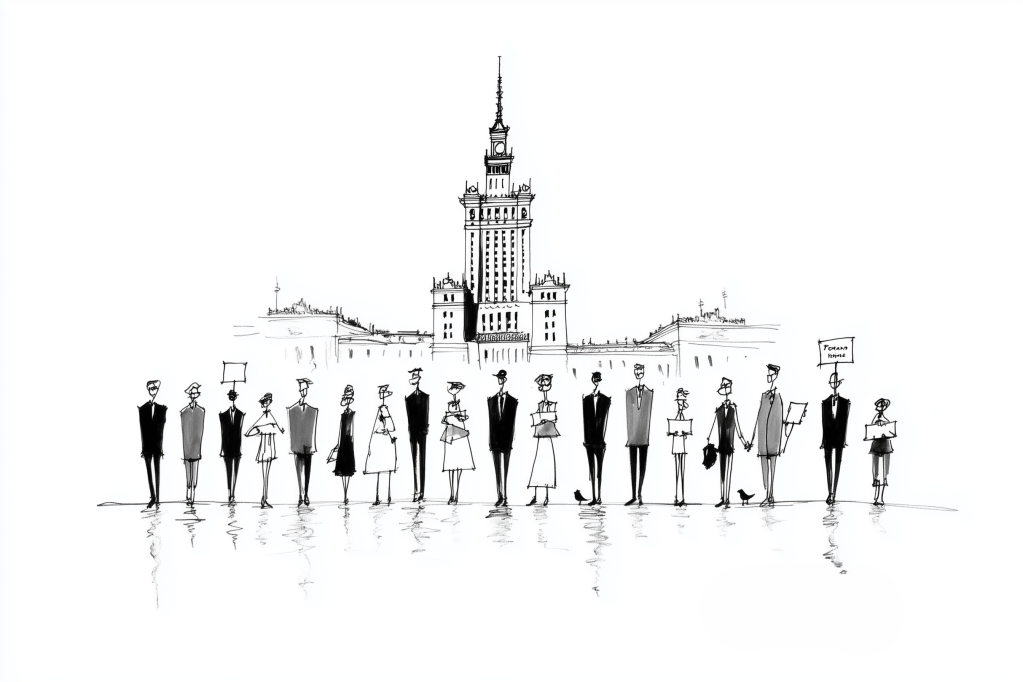
NCN Grant on Pandemic Protests in Poland: Activities in 2025
We, the research team funded by the National Science Centre (NCN), Poland (2021/43/B/HS6/01155) grant entitled “The Construction of Post-Pandemic Society: Covid-19 Street Protest in Poland,” published articles, organized a conference, and presented research in 2025. Articles Published in 2025 Radiukiewicz, Anna, Joshua Dubrow, and Alan Żukowski. “Multimodal approaches to the reconstruction of street protest events…
-
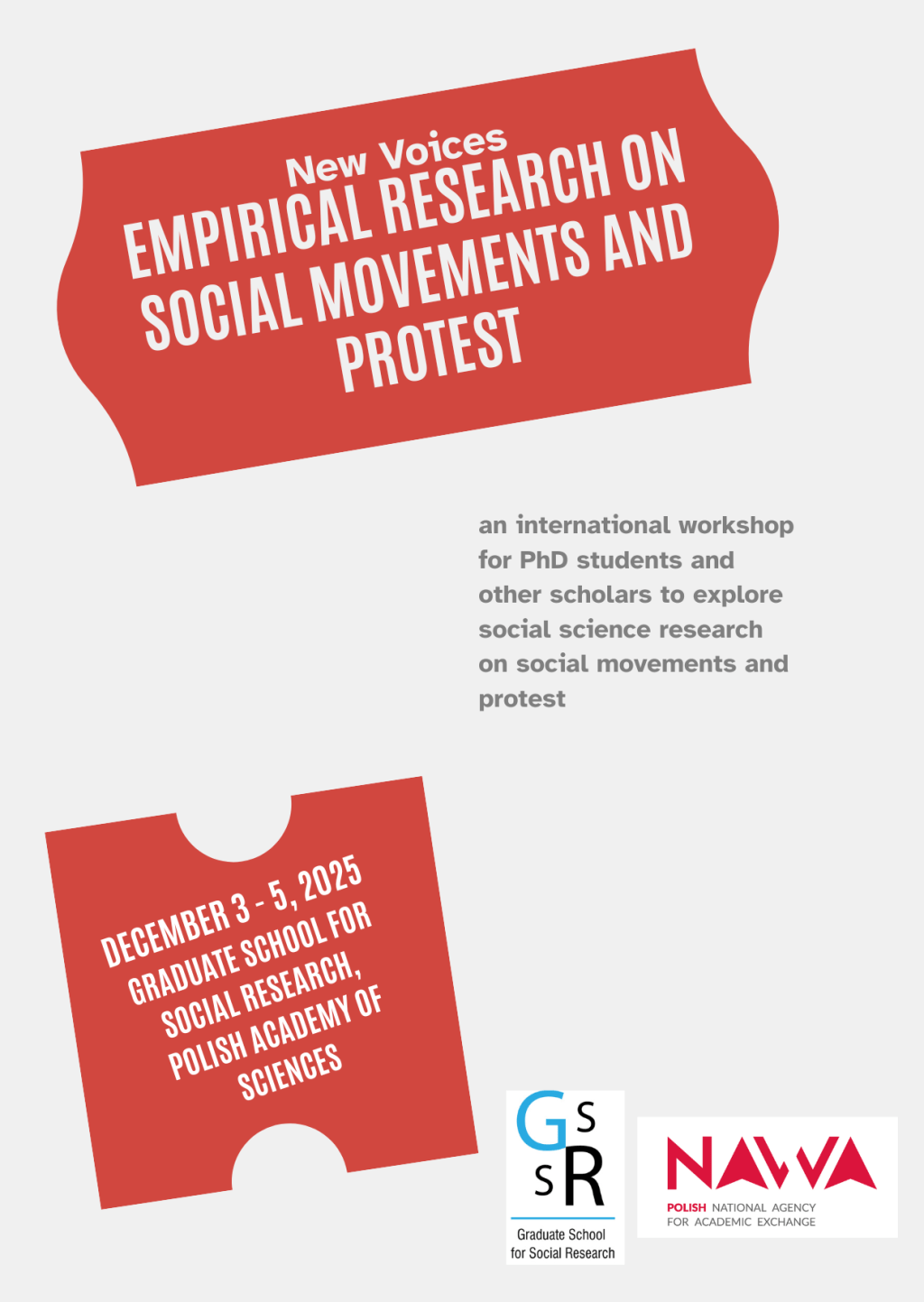
PhD Workshop: New Voices in Social Movements and Protest
The three-day English-language international event, “Empirical Research on Social Movements and Protest: New Voices” will take place December 3, 4, 5, 2025 at the Graduate School for Social Research, Polish Academy of Sciences, and feature PhD student research on their projects in political sociology. Major events around the world over the last two decades —…
-

Empirical Research on Protests and Social Movements in Central and Eastern Europe: Conference 2025
Empirical Research on Protests and Social Movements in Central and Eastern Europe: State of the Art Institute of Philosophy and Sociology, Polish Academy of Sciences (IFiS PAN)72 Nowy Swiat, Warsaw, Poland December 4 – 5, 2025 About Major events in Europe over the last two decades — financial crises, rising populism, EU skepticism, pandemic, and…
-

Every protest is an imagined future
Protests often emerge from a mix of grievance and hope – i.e., dissatisfaction with the present with an aim to change it for the better. Whereas street protests are commonly understood as physical, dynamic, interactive, and collective expressions of objection and dissent, less common is the idea that this form of collective action is future-oriented;…
-
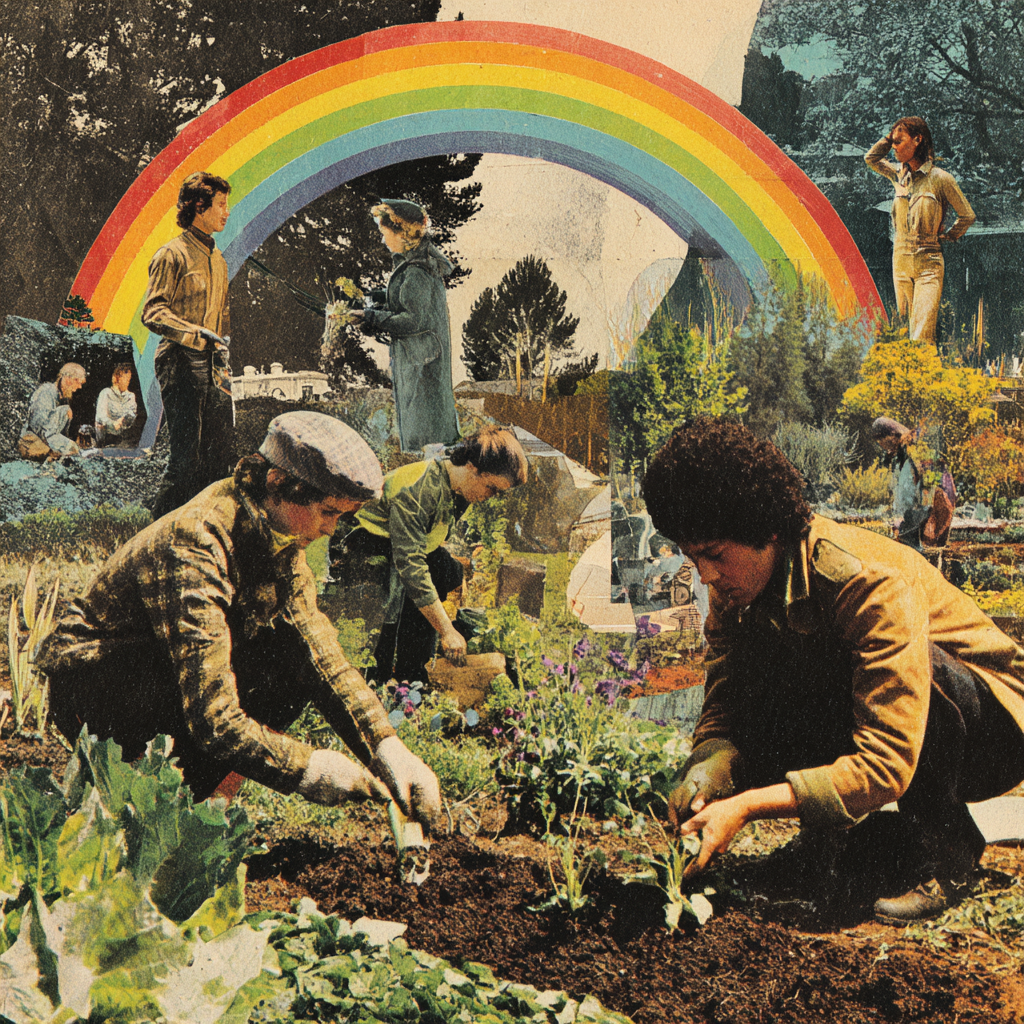
Prefiguration, or “Be the Change”
Prefiguration is the future-oriented construction of political alternatives during protest and movement-building, where activists reflect their political goals and values within the processes of their movements. This post is a summary of the well-cited article on the topic by Luke Yates, “Prefigurative politics and social movement strategy: The roles of prefiguration in the reproduction, mobilisation…
-

NCN Grant on Pandemic Protests in Poland: Activities in 2024
We, the research team funded by the National Science Centre (NCN), Poland (2021/43/B/HS6/01155) grant entitled “The Construction of Post-Pandemic Society: Covid-19 Street Protest in Poland,” presented several papers, and published a couple of articles and a book review, in 2024. Published articles in 2024 Dubrow, Joshua K., Anna Radiukiewicz, and Alan Żukowski. “Government justification of…
-
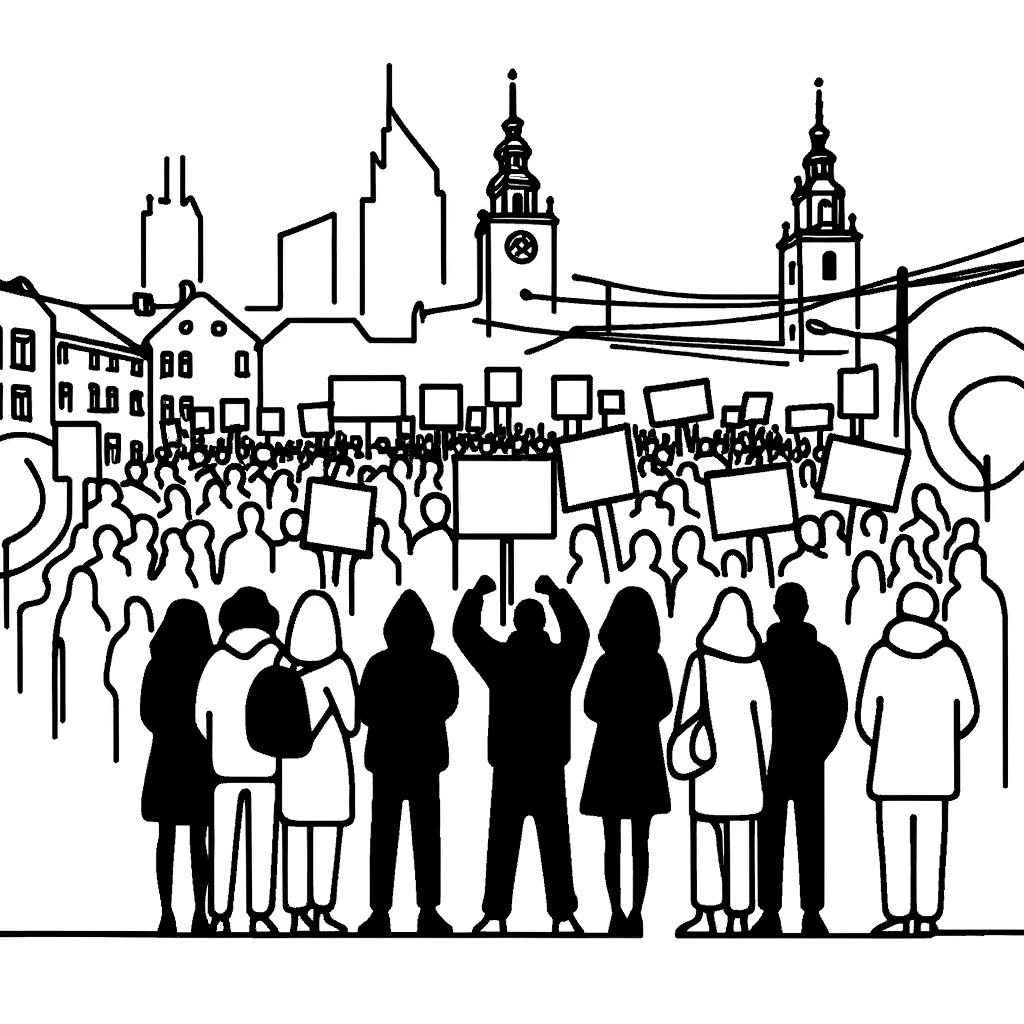
NCN Grant on Pandemic Protests in Poland: Presentation Abstracts in 2023
We, the research team funded by the National Science Centre (NCN), Poland (2021/43/B/HS6/01155) grant entitled “The Construction of Post-Pandemic Society: Covid-19 Street Protest in Poland,” presented three papers in 2023. One of them was “Reconstructions of the Covid-19 Protests in Poland: Using Text, Pictures, and Video Data to Derive Visions of Social Change” at WZB…
-

Reconstructing Protests with Text and A/V: Conference Abstract
We presented a paper called, “Reconstructions of the Covid-19 Protests in Poland: Using Text, Pictures, and Video Data to Derive Visions of Social Change.” See also: NCN Grant on Pandemic Protests in Poland: Presentation Abstracts in 2023 This presentation and the paper we submitted for the conference was funded by the National Science Centre (NCN),…
-

Joseph Stiglitz: Democracy, Justice, and Inequality
Why is inequality bad for democracy and justice? What can be done about it? In this post, we present the works of Joseph Stiglitz, a Nobel laureate, economist, and professor at Columbia University. Focusing on three of his key books, “The Price of Inequality,” “The Great Divide,” and “People, Power, and Profits,” we present Stiglitz’s…
-

President Obama on Money in Politics
The influence of money in politics continues to undermine American democracy. Despite former President Obama’s well-intentioned efforts to tackle this pervasive problem, his administration’s attempts fell short. We explore Obama’s fight against the corrupting power of money in politics, including the various initiatives he championed and the obstacles he faced, such as the Citizens United…
-

Effects of Political Inequality on Society
Inequality — economic, political, social — is at the heart of society’s troubles. Political inequality is a particular kind and it has many definitions. In the main, it refers to structured differences in influence and outcomes of political processes. What are the effects of political inequality on society? Here we explore the consequences of political…
-
Power Inequality: Trends in Europe
Inequality is generally understood as long-standing structured differences in social, economic, legal, and political resources. Inequalities intersect, such that power inequality is associated with economic, legal, social, and political inequality. What is power inequality? Power inequality is defined as structured differences in the capacity of principals to realize their will against the interests and efforts…
-

Gender Quotas in Politics
Gender quotas in politics are rules that aim at providing opportunities for women to be in parliament or to appear on candidate lists in elections for political office. In this post, we discuss the types of gender quotas in politics, how parliaments in democracy adopt quotas, whether they are effective in placing more women in…
-
Visions of a Post-Pandemic Society via Street Protest in Poland: NCN Grant (2021/43/B/HS6/01155)
We are looking for hired a post-doctoral scholar and a graduate research assistant to be part of the research team led by dr. hab. Joshua K. Dubrow at IFiS PAN on the implementation of the international research project funded by the National Science Centre, Poland (2021/43/B/HS6/01155) entitled “The Construction of Post-Pandemic Society: Covid-19 Street Protest…
-

Political Equality in V-Dem: “Power distributed by gender”
In a previous post, we discussed how the Varieties of Democracy “V-Dem” project measures “political equality.” V-Dem is an expert survey. They guide the expert-respondents’ attention to particular groups’ political equality. These groups are: (a) socioeconomic position, (b) social groups, (c) gender, and (d) sexual orientation. In this post, we discuss how they measure “Power…
 Political Inequality: A blog since 2010