Tag: Democracy
-

Social Movement Theory: Fields, Arenas, and Players
Social movement theory typically uses the concepts of fields, arenas, and players or actors. But these concepts seem to be conceptually similar. In this post, I critique two articles by prominent social movement theorists to understand fields, arenas, and players. At the end, I attempt a synthesis. See also: Social Movement Outcomes Social Movement Fields…
-

Gender Quotas in Politics
Gender quotas in politics are rules that aim at providing opportunities for women to be in parliament or to appear on candidate lists in elections for political office. In this post, we discuss the types of gender quotas in politics, how parliaments in democracy adopt quotas, whether they are effective in placing more women in…
-

Political Equality in V-Dem: “Power distributed by gender”
In a previous post, we discussed how the Varieties of Democracy “V-Dem” project measures “political equality.” V-Dem is an expert survey. They guide the expert-respondents’ attention to particular groups’ political equality. These groups are: (a) socioeconomic position, (b) social groups, (c) gender, and (d) sexual orientation. In this post, we discuss how they measure “Power…
-
Political Equality in V-Dem: “Power distributed by sexual orientation”
In a previous post, we discussed how the Varieties of Democracy “V-Dem” project measures “political equality.” V-Dem is an expert survey. They guide the expert-respondents’ attention to particular groups’ political equality. These groups are: (a) socioeconomic position, (b) social groups, (c) gender, and (d) sexual orientation. In this post, we discuss how they measure “Power…
-

Political Equality in V-Dem: “Power distributed by social group”
In a previous post, we discussed how the Varieties of Democracy “V-Dem” project measures “political equality.” V-Dem is an expert survey. They guide the expert-respondents’ attention to particular groups’ political equality. These groups are: (a) socioeconomic position, (b) social groups, (c) gender, and (d) sexual orientation. In this post, we discuss how they measure “Power…
-

Political Equality as Measured by Varieties of Democracy (V-Dem)
If we want to measure the power structure of society, we can examine the extent of political equality. For a quantitative measure, one can use the Varieties of Democracy (V-Dem, as it is commonly referred to) dataset’s “political equality” measure (see also Cole 2018). In this post, I examine and critique the “political equality” measure…
-
Political Voice and Economic Inequality: Institutional Factors
We at the POLINQ project examined 18 quantitative cross-national articles by major scholars in the leading journals to develop a typology of institutional factors that influence the relationship between political voice and economic inequality. We comment on how scholars have measured these factors, or “concepts.” At a glance… Institutional Factors that Link Voice to Inequality…
-

The Many Definitions of Political Inequality
What is the definition of political inequality? Political inequality is worrisome for the future of democracy. Unequal access to political decision-makers means that the political voice of the few is louder than the political voice of the many. But how can we define political inequality? In my book published by Routledge, I defined political inequality…
-
Political Participation and Democracy
What is the relationship between political participation and democracy? Democracy and political participation — such as protest or voting — feed off of each other. Social scientists argue that when democracy is strong, more people participate. Why? Because democracy opens up possibilities for political participation such as voting, protest, and working for political parties and…
-

Democratic Backsliding: Definition and Measurement
What is democratic backsliding? Democratic backsliding is when a democratic country shows signs of becoming autocratic or authoritarian. Backsliding can occur when a democracy has just a foothold (e.g. Poland in the early 1990s) or is firmly established as a democracy (the USA). How do we know when democratic backsliding occurs? Social scientists typically use…
-

Democracy and Economic Inequality
Why does economic inequality rise in democracies? Economic inequality is rising, and the United Nations reports that economic inequality impacts 70 percent of the world, even when we include democracies such as the US, UK, France, and Germany. Why does democracy not reduce economic inequality? According to democratic theories, giving everyone the vote and allowing…
-

How Political Voice Fares in an Age of Rising Inequality: Frederick Solt’s Research on Economic Inequality and Democracy
Political Voice and Economic Inequality The basics of modern life — job, education, and income — can shape our interest in politics, our desire to discuss politics with others, and our decision to vote. In the parlance of social science, occupation and socioeconomic status may impact “political engagement,” otherwise known as political voice. We politically…
-

Interview with Piotr Zagorski on Education and Support for Right-wing Populist Parties in Central and Eastern Europe
Piotr Zagorski and Andrés Santana, of Universidad Autónoma de Madrid, Spain, recently presented their paper, “Voice or Exit: Education, Support for Right-wing Populist Parties, and Abstention in Central and Eastern Europe,” at the Politics and Inequality conference held December 2018 in Warsaw, Poland. Piotr Zagórski is a Ph.D. candidate in Political Science at Faculty of…
-
Interview with Jan Falkowski on Political Power and Land Inequality in Poland
Jan Falkowski, of the University of Warsaw, Poland, recently presented a paper, “Do Political and Economic Inequalities Go Together? Mayors’ Turnover, Elite Families and the Distribution of Agricultural Land” at the Politics and Inequality conference held in Warsaw, Poland. Jan Falkowski is an Assistant Professor with the University of Warsaw, Faculty of Economic Sciences, Chair…
-
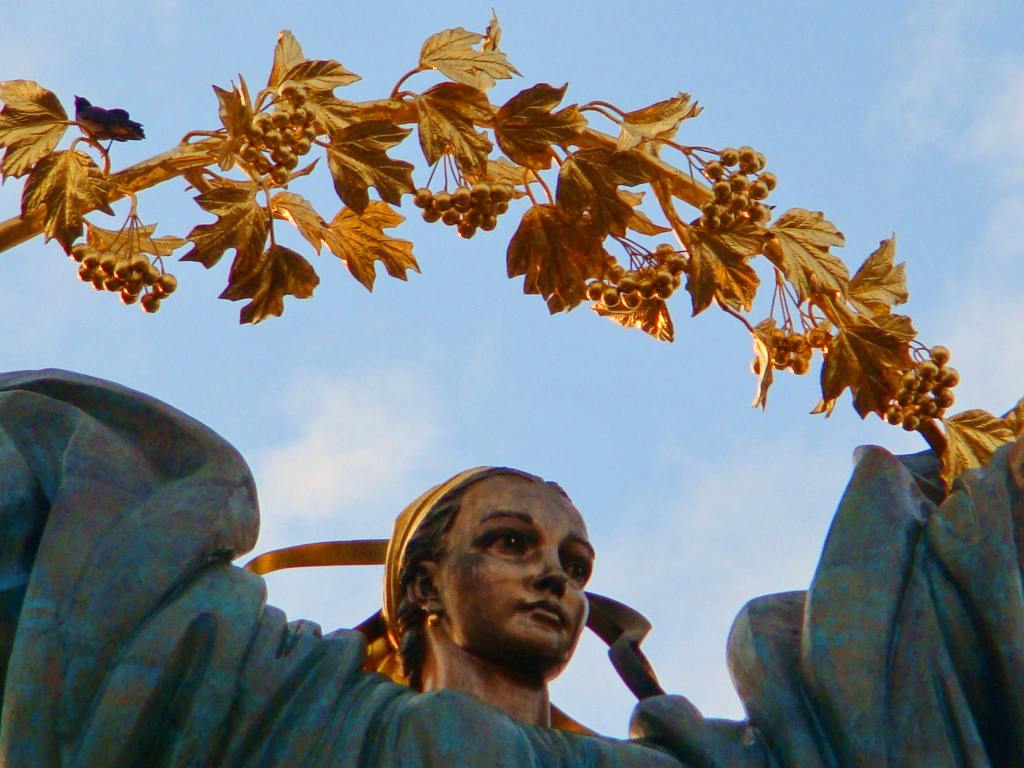
Political Inequality and the Revolution of Dignity in Ukraine
This is a guest post by Olga Zelinska, Polish Academy of Sciences, based on an early article (2015) on local Maidans. The Start of Euromaidan in Ukraine It was the summer of 2013 and the people of Ukraine felt helpless. During this time of ‘soft authoritarianism,’ they saw rampant corruption while corporations and other business…
 Political Inequality: A blog since 2010